
Rome’s Fingerprints, Still Showing
Before Madrid was a royal capital and long before Córdoba became the center of a caliphate, much of the Iberian Peninsula belonged to Roman Hispania.
Roman control developed gradually beginning in the third century BC. Roads, aqueducts, theaters, bridges, and cities spread across the peninsula.
Much of that Roman world now sits beneath later construction, which is exactly why the surviving pieces matter.
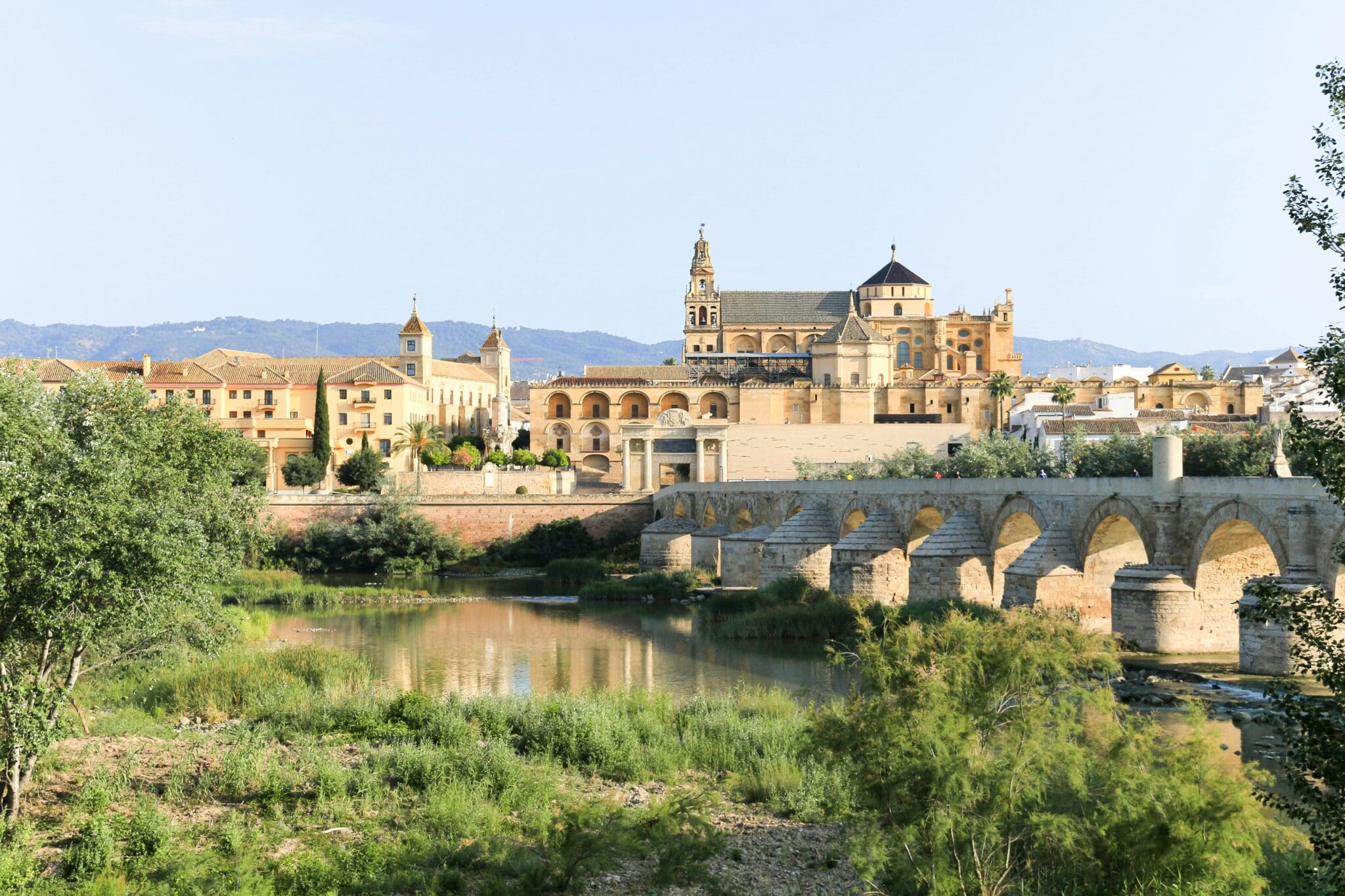
Córdoba, for example, served as the capital of the Roman province of Baetica. Its bridge across the Guadalquivir is Roman in origin, although centuries of rebuilding have changed its appearance considerably. The city was already an important political and urban center long before Islamic armies reached Iberia in the eighth century.
That earlier history is worth remembering as the journey continues south. The cities that later became famous under Muslim and Christian rulers were rarely being created from nothing. They were inheriting places that had already been evolving for centuries.
Toledo: Where the “Three Cultures” Story Gets Complicated
An hour south of Madrid, Toledo is usually introduced as the “City of Three Cultures,” a label that flatters the city more than it explains it.
Christian, Muslim, and Jewish communities did shape Toledo over centuries, but the phrase implies a harmony that was never constant. Periods of coexistence existed alongside legal inequality, political upheaval, religious restrictions, and violence.
What survives is the architecture, and it reveals a far more complicated story.
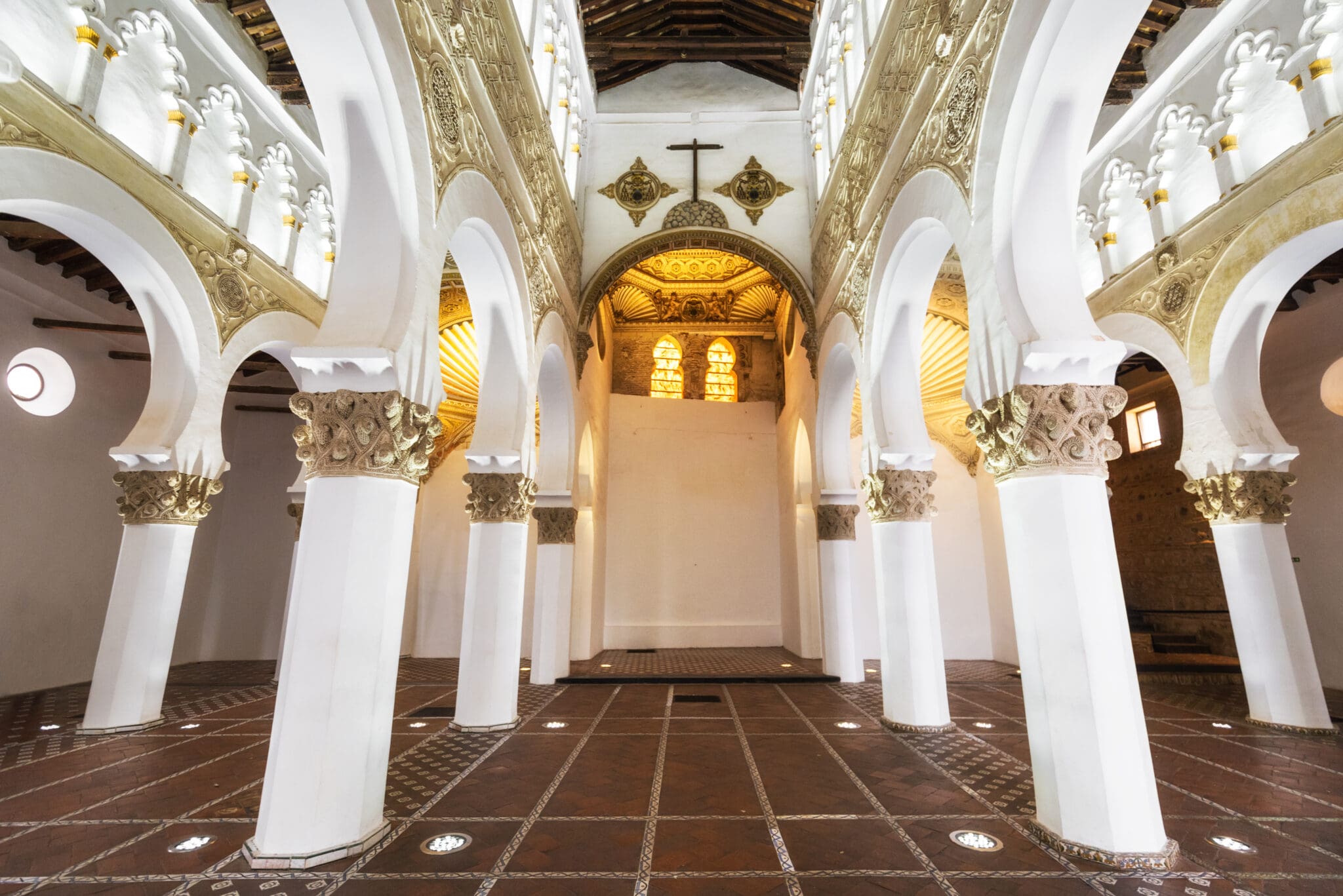
The Mosque of Cristo de la Luz, built in the late tenth century, outlasted the Christian conquest of Toledo in 1085 and still stands today. A few streets away, the Synagogue of Santa María la Blanca was built for Toledo’s Jewish community using horseshoe arches and decorative plasterwork associated with the Mudéjar tradition and the craftsmanship of Islamic Spain.
Centuries later, it became a Christian church.
The building therefore carries multiple identities at once: Jewish in its original purpose, Islamic in much of its architectural language, and Christian in its later history.
That is a more useful way to understand Toledo than imagining three cultures existing in neatly separated quarters.
The same continuity of craftsmanship appears again farther south in Seville, where Christian rulers deliberately embraced artistic traditions inherited from Al-Andalus.
Córdoba: A City Compressed Into Its Own Layers
Córdoba had already been a Roman capital by the time Muslim forces entered Iberia in the early eighth century.
It became the seat of an emirate and then, in 929, the capital of an independent caliphate. For a period, Córdoba ranked among medieval Europe’s major centers of learning, scholarship, commerce, and political power.
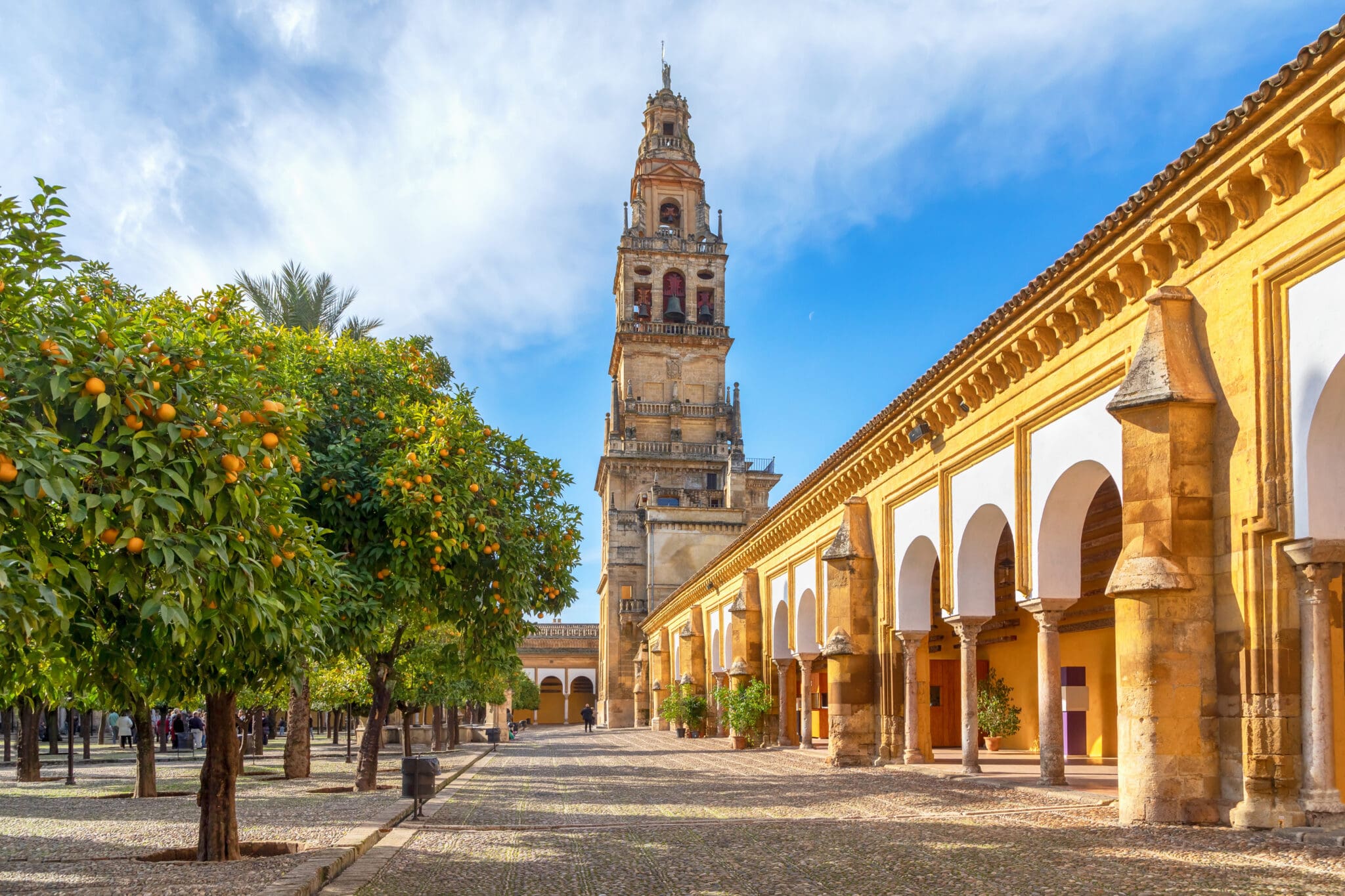
Its central monument, the Mezquita-Catedral, may be the clearest place on this journey to see Spain’s historical layers made physical.
The original mosque built under Abd al-Rahman I incorporated Roman and Visigothic materials from earlier structures. Columns and capitals that had already belonged to older buildings were given new roles within the mosque, making reuse part of the Mezquita’s story from its earliest construction.
Above them rose the famous system of double arches, with alternating red-and-white bands that created both additional height and one of the most recognizable interiors in Europe.
The mosque expanded repeatedly as Córdoba grew. After Christian forces took the city in 1236, it was consecrated as a cathedral. Chapels appeared over the following centuries, followed eventually by a Renaissance nave constructed directly within the former prayer hall.
Walk through the repeating Islamic arches today and the space suddenly opens into a soaring Christian sanctuary.
The surrounding historic center adds still more layers. Córdoba’s Judería, its old Jewish quarter, contains a rare surviving medieval synagogue and preserves the memory of a community that once played an important role in the city.
Córdoba was also the birthplace of Moses Maimonides, the physician, philosopher, and Jewish scholar whose writings became influential far beyond medieval Spain.
Between the Roman bridge, the mosque-turned-cathedral, and the Judería, Roman, Islamic, Jewish, and Christian history sit within roughly a fifteen-minute walk of one another.
Seville: Where a Christian King Chose an Islamic Style on Purpose
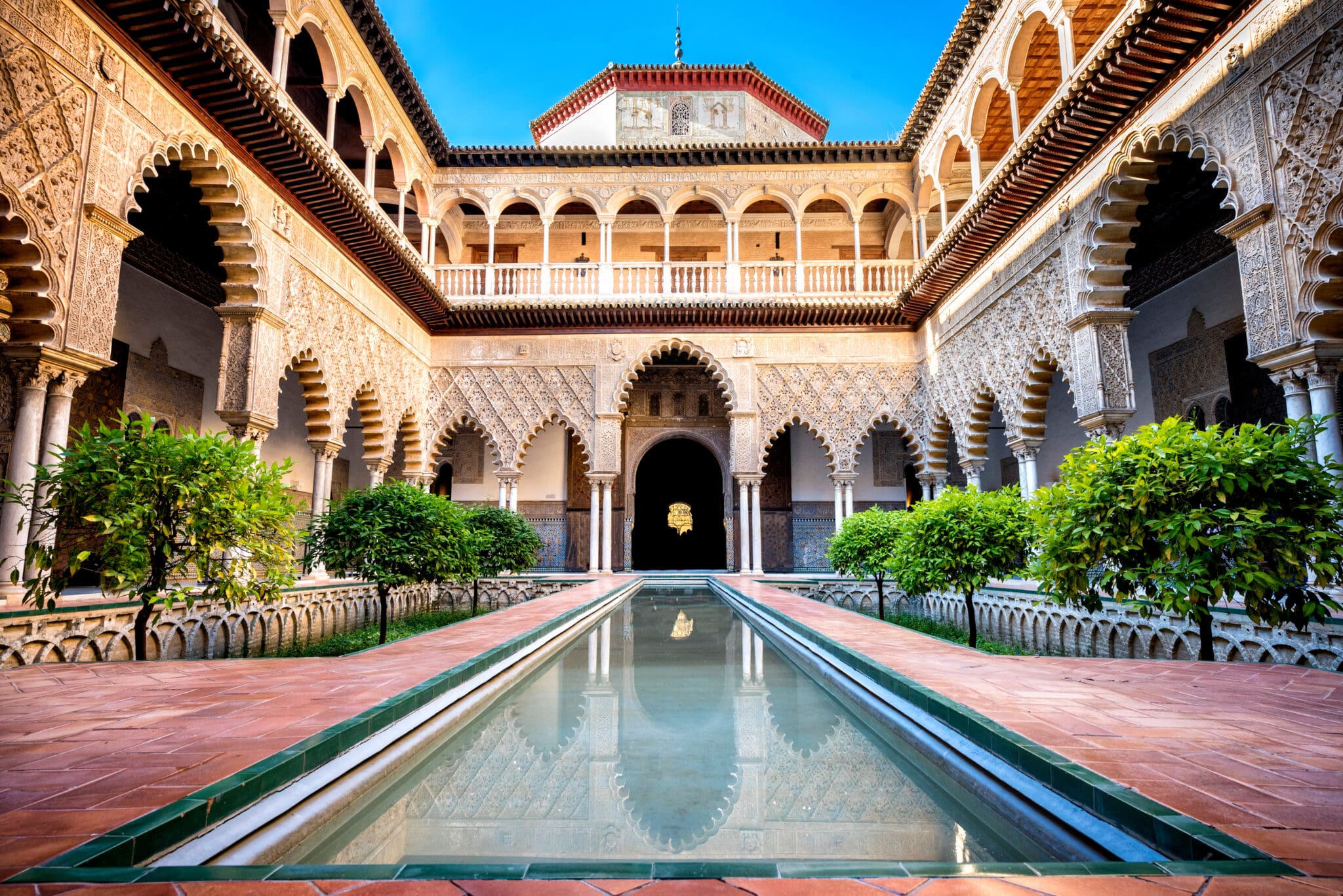
Toledo and Córdoba show buildings that changed hands. Seville reveals something even more deliberate: Christian rulers choosing to continue building in an artistic tradition associated with the people they had conquered.
The Giralda makes the point immediately.
It began as the minaret of Seville’s great Almohad mosque in the 12th century. After Christian forces took the city in 1248, the mosque was eventually replaced by Seville Cathedral, one of the largest Gothic churches in the world.
The minaret survived.
Its interior also contains one of the tower’s more unusual features. Instead of relying primarily on a conventional staircase, the Giralda was designed with a series of broad ramps winding upward through the tower. They were wide and gradual enough to allow people to ascend on horseback.
Visitors still climb those ramps today before reaching the upper section of the tower and its views across Seville.
The Real Alcázar takes the cultural overlap even further.
Parts of the palace complex originated under Seville’s Islamic rulers, but some of its most celebrated rooms were commissioned generations later by the Christian king Pedro I. Craftsmen working in the Mudéjar tradition filled the palace with geometric tilework, carved plaster, Arabic inscriptions, horseshoe arches, and intricately patterned ceilings.
Pedro I was not simply living in an old Islamic palace. He was intentionally using the artistic language of Al-Andalus to express royal power.
That complicates any tidy version of the “Reconquista” as one culture simply replacing another.
The term remains widely used, but historians increasingly question the idea that centuries of warfare among shifting Christian and Muslim kingdoms represented one continuous campaign of national “reconquest.” Political control changed repeatedly across medieval Iberia, while artistic styles, craft traditions, commercial relationships, and communities continued crossing those political boundaries.
Seville’s buildings make that complexity visible.
Granada: The Last Kingdom, and the Year Everything Changed
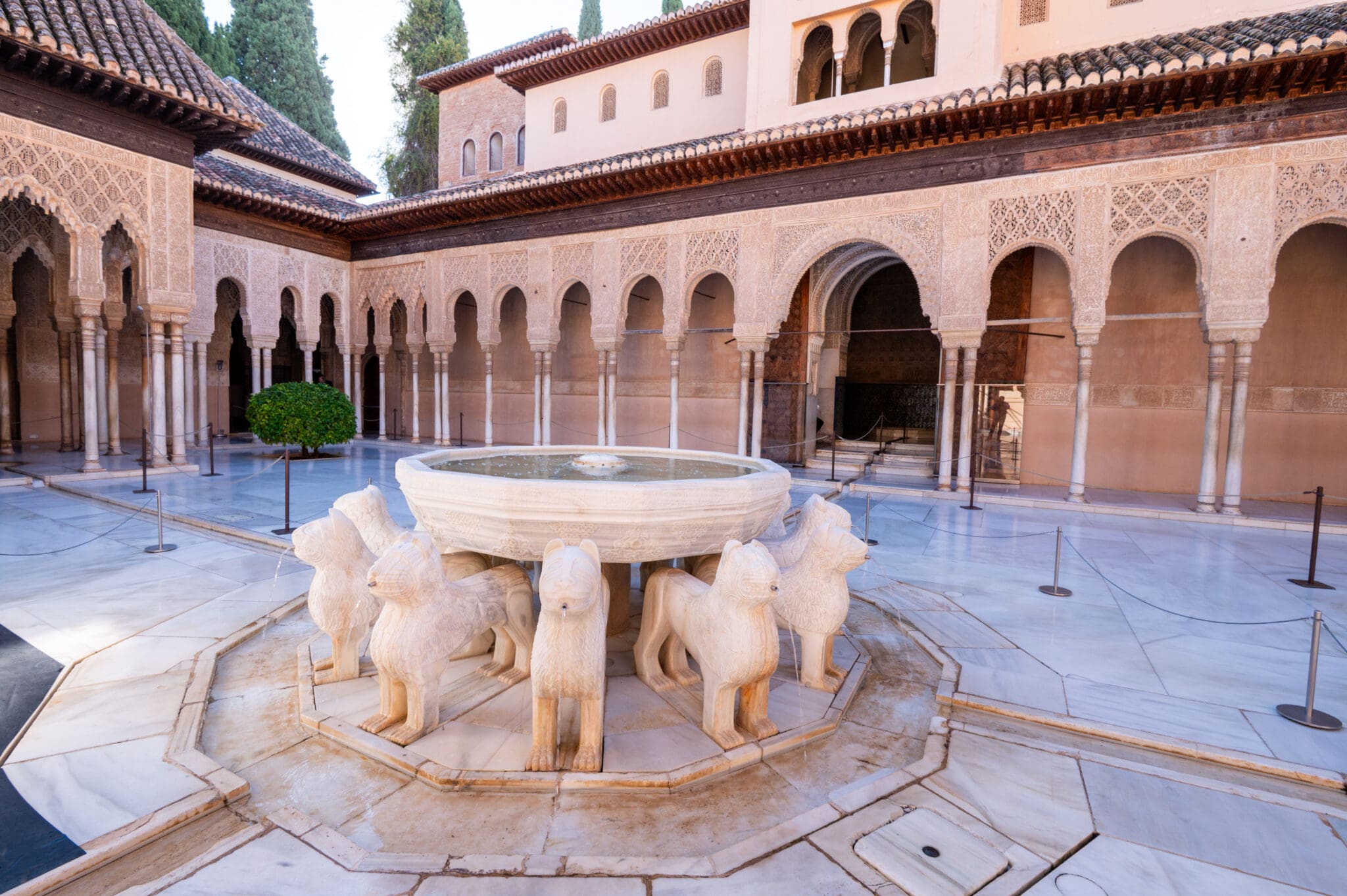
Granada carries particular weight because the Nasrid Kingdom of Granada became the final Muslim-ruled state on the Iberian Peninsula.
Its surrender in 1492 by Muhammad XII, known in the West as Boabdil, to the Catholic Monarchs Ferdinand and Isabella ended nearly eight centuries of Muslim political rule in parts of Iberia.
The Alhambra survived the transition and remains one of Europe’s finest examples of Islamic architecture.
Built and expanded primarily under the Nasrid dynasty, its power is found as much in detail as in scale. Arabic inscriptions run in bands across palace walls. Geometric tiles repeat in intricate patterns. Carved plaster changes character as sunlight moves across its surface.
The Generalife gardens use water, vegetation, framed views, and narrow channels to create spaces that feel remarkably controlled and intimate even centuries later.
The Alhambra may dominate Granada’s skyline, but the city below has an identity of its own. Explore the Albaicín, Sacromonte, tapas culture, hidden gardens, and mountain setting in our guide to Granada beyond the Alhambra.
Christian rule reshaped Granada quickly.
Granada After 1492
The Royal Chapel became the burial place of Ferdinand and Isabella near the heart of the former Nasrid capital. Churches and Christian institutions transformed other parts of the city.
The year 1492 also became a turning point far beyond Granada. Columbus received royal backing for his Atlantic voyage, while the Crown ordered practicing Jews within its realms to convert or leave.
That decree did not appear suddenly.
In 1391, anti-Jewish violence had swept through Castile and Aragón, devastating communities in Toledo, Córdoba, Seville, and elsewhere. The attacks contributed to widespread forced conversions and the growth of Spain’s converso population, whose members later became targets of suspicion and investigation by the Inquisition.
The 1492 Alhambra Decree came at the end of a much longer period of increasing pressure on Jewish communities.
What Was Lost, Not Just What Survived
Jewish Spain can easily fade into the background on a journey through these cities because so much of what once existed no longer does.
The communities themselves were displaced.
What remains is often architectural: Toledo’s former synagogues, Córdoba’s Judería and medieval synagogue, scattered inscriptions, and street patterns that preserve the outlines of old Jewish quarters.
Sephardic Jewish communities had flourished across the Iberian Peninsula for centuries. Toledo and Córdoba became particularly important centers where Jewish scholars, physicians, merchants, and intellectuals participated in urban life under both Muslim and Christian rulers.
That experience was never one of uninterrupted tolerance. Conditions changed with place, period, and political leadership.
The violence of 1391 and the expulsion of 1492 eventually scattered Sephardic communities across North Africa, Portugal, Italy, the Ottoman Empire, and elsewhere.
Many carried with them an identity still tied to the Iberian Peninsula. The word Sephardic itself derives from Sefarad, the Hebrew name traditionally associated with Spain.
Standing inside Toledo’s surviving synagogues or walking through Córdoba’s Judería, the history lies partly in what remains and partly in understanding what disappeared.
Málaga: The Same Pattern, One Last Time
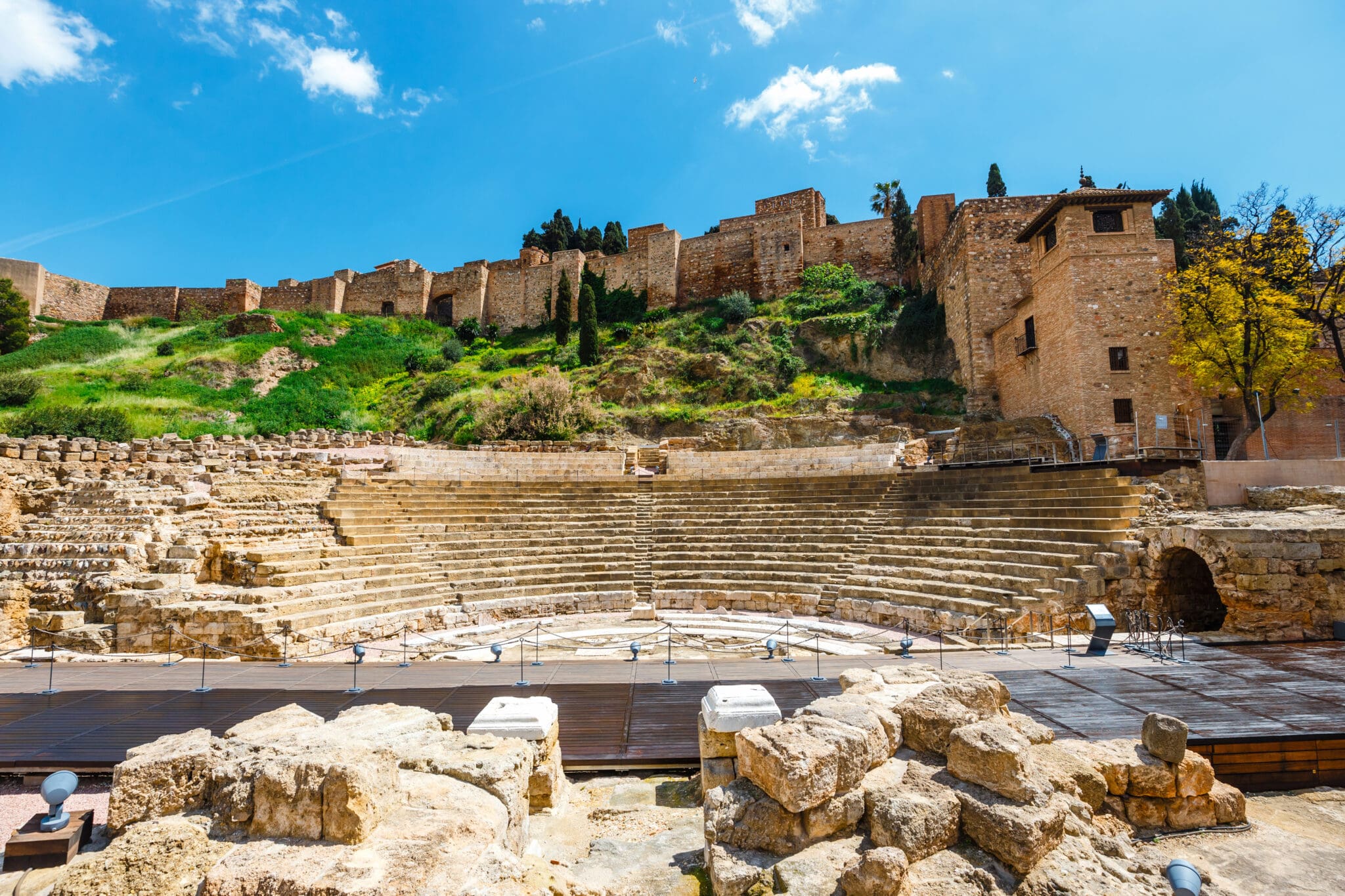
By the time the journey reaches Málaga, the pattern is easy to recognize.
At street level, a Roman theater from the first century BC sits open to the sky.
Immediately above it rises the Alcazaba, an Islamic fortress constructed many centuries later. Its builders incorporated stone from the Roman theater into the later structure.
The two monuments are so close that they can be seen together.
A short walk away, Málaga Cathedral represents another chapter: the Christian city that developed after the Catholic Monarchs captured Málaga in 1487, five years before Granada surrendered.
Standing beside the Roman theater with the walls of the Alcazaba rising above it brings the journey into focus. Roman Málaga did not disappear before Islamic Málaga emerged, and Islamic Málaga was not completely erased when Christian rulers took the city.
Each period inherited something already there.
That physical relationship between the theater and fortress may be the clearest single image of what has been happening throughout the journey from Toledo southward: Spain repeatedly built into, over, and out of its own past.
The Point of Traveling This Way
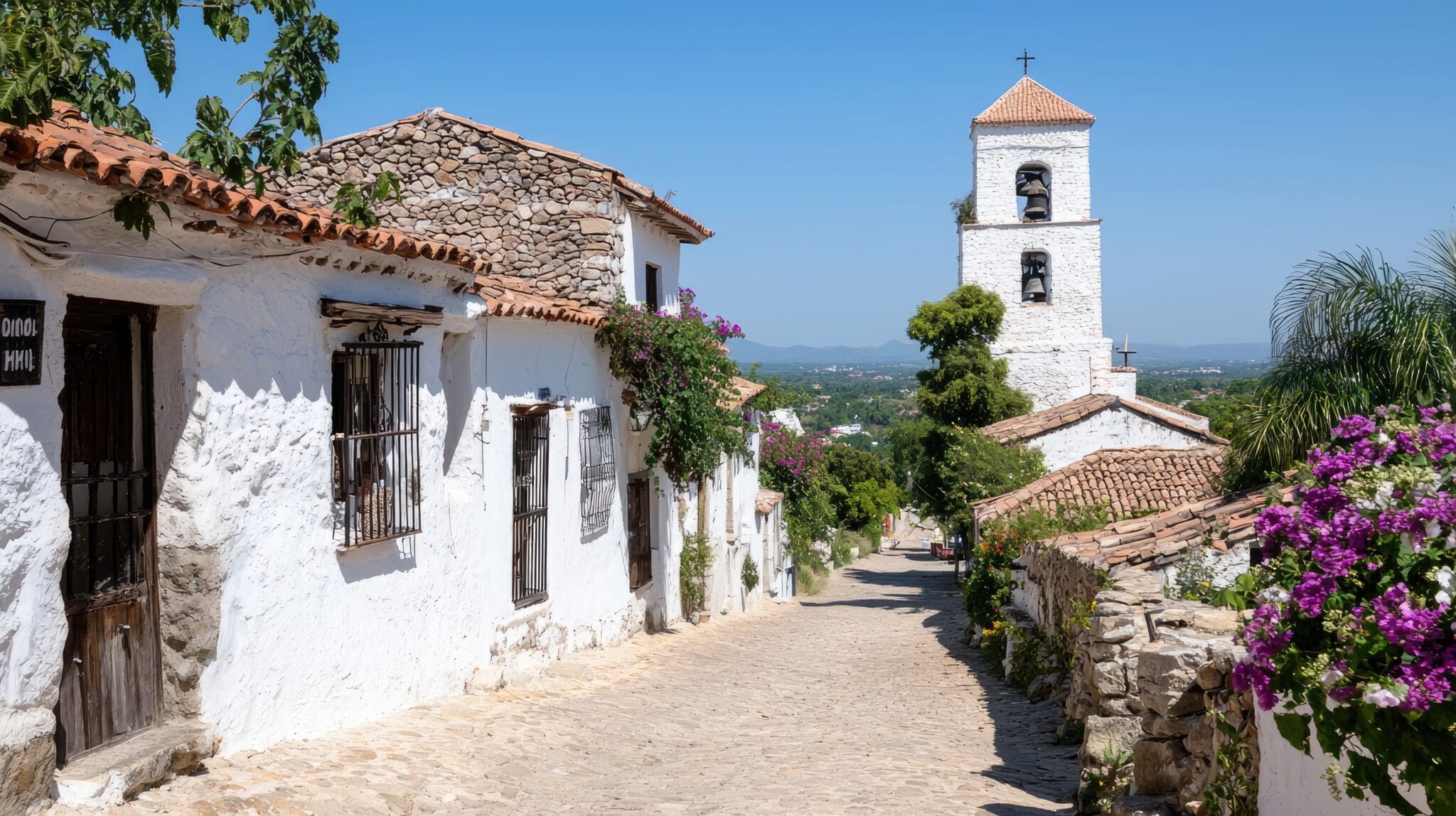
Spain can easily be visited as a collection of famous landmarks: Toledo Cathedral, Seville’s Alcázar, Córdoba’s Mezquita, Granada’s Alhambra, Málaga’s Roman Theater.
Each rewards a visit on its own.
The experience changes when those places begin to read as parts of the same story.
Rome established cities and infrastructure that later societies inherited. Islamic rulers transformed Córdoba, Seville, Granada, Málaga, and other parts of Iberia into important medieval centers. Jewish communities contributed to scholarship, medicine, commerce, and urban life for centuries before persecution and expulsion scattered them across the Mediterranean and beyond.
Christian kingdoms conquered territory while continuing to inhabit older cities, reuse buildings, employ established craftsmen, and embrace artistic traditions associated with Al-Andalus.
Those histories remain visible in the places travelers encounter today: in a Roman bridge leading toward a former mosque, a Gothic cathedral attached to an Almohad minaret, a synagogue filled with Mudéjar arches, and an Islamic-style palace created for a Christian king.
Travel from Madrid through Toledo and into Andalusia with these connections in mind, and the route stops feeling like a string of beautiful old cities. It becomes a journey through the civilizations that built Spain, each leaving something for the next to inherit.