France Dining Guide Cheat Sheet
If you only remember one thing from this France dining guide, remember this: different French dining spots serve different purposes.
Where Should You Eat in France?
Use this quick France dining guide to choose the right spot for the experience you want.
- Choose a bistro for a cozy, traditional meal with classic French dishes.
- Choose a brasserie for a lively atmosphere, a larger menu, and more flexible dining hours.
- Choose a restaurant for a more refined meal, especially if you want a special dinner or tasting-menu experience.
- Choose a café for coffee, drinks, people-watching, and light food.
- Choose a boulangerie for bread, pastries, sandwiches, and picnic supplies.
- Choose a pâtisserie for elegant desserts, cakes, tarts, éclairs, and macarons.
- Choose a bouchon in Lyon for hearty regional Lyonnaise cuisine.
- Choose a crêperie for savory galettes and sweet crêpes.
- Choose a salon de thé for tea, pastries, and a quieter afternoon break.
- Choose a marché for fresh produce, cheese, charcuterie, prepared foods, and picnic ingredients.
What’s the Difference Between a Bistro and Brasserie?
The main difference between a bistro and brasserie comes down to size, atmosphere, menu, and hours.
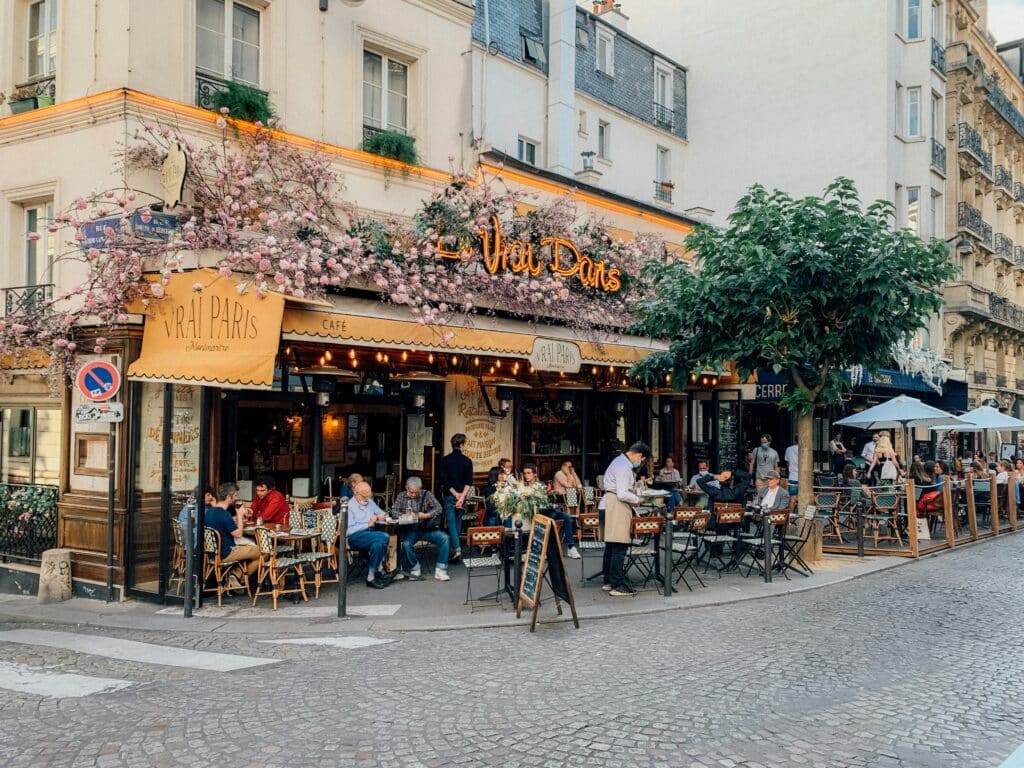
A bistro is usually smaller, more intimate, and more neighborhood-focused. It often serves traditional French home-style cooking with a shorter menu and a relaxed but personal atmosphere.
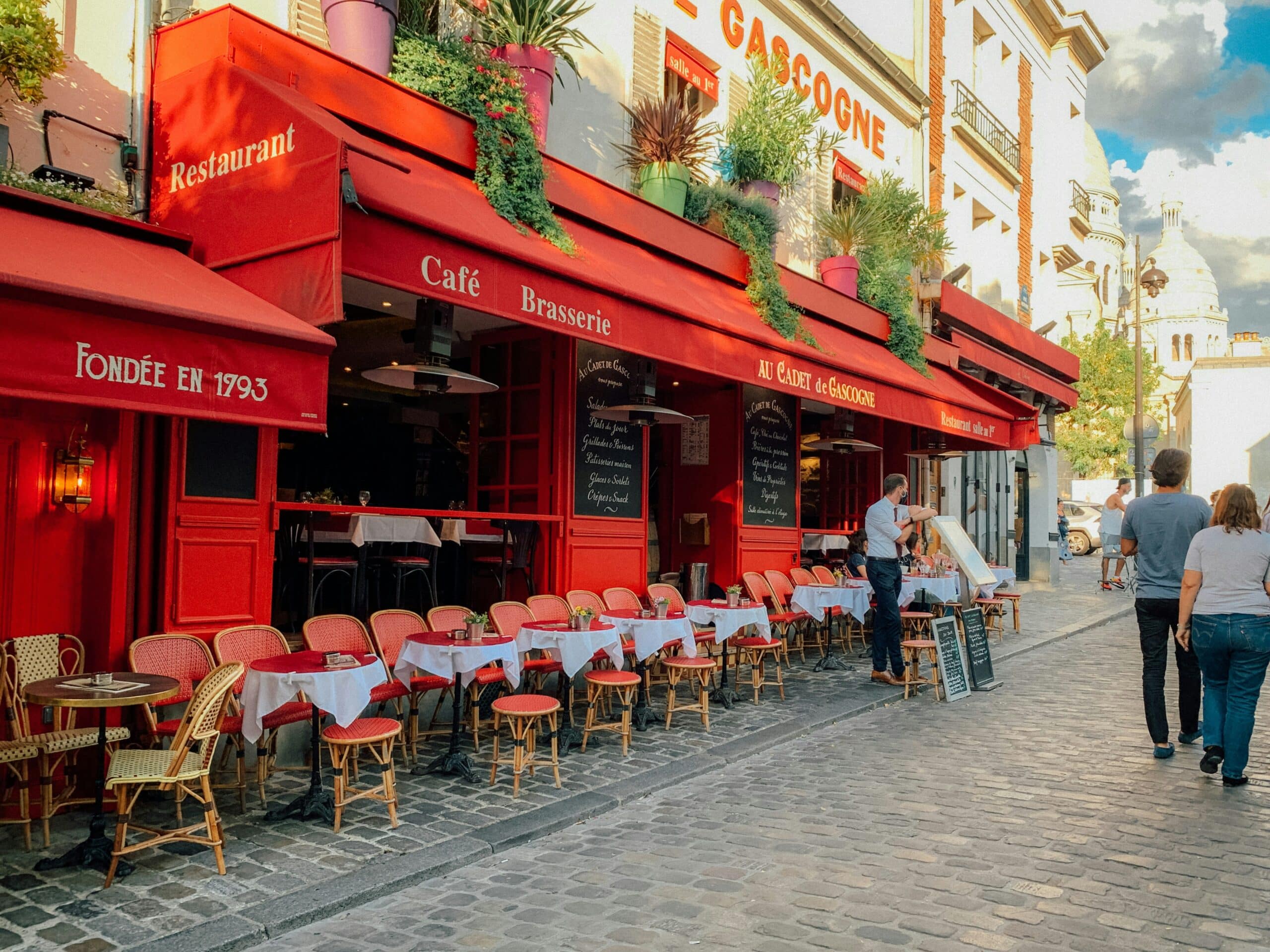
A brasserie is usually larger, livelier, and more flexible. Brasseries often serve food throughout the day and have broader menus that may include seafood, steak frites, choucroute, beer, salads, roast chicken, and classic French desserts.
In simple terms: choose a bistro when you want a cozy, traditional meal. Choose a brasserie when you want more choices, livelier surroundings, or a full meal outside normal lunch and dinner hours.
Understanding this difference matters because French restaurants do not all operate the same way. If you miss the traditional lunch window, a small bistro may be closed, while a brasserie may still be serving. If you want a quiet, local meal, a bustling brasserie may feel too busy. Choosing the right place helps you avoid frustration and enjoy the meal you actually want.
What Is a Bistro?
A bistro is one of the most beloved types of French restaurants, especially for travelers looking for a casual but authentic meal.
At its heart, a bistro is a modest neighborhood restaurant serving straightforward French cooking. The menu is usually short and may change based on what is fresh or seasonal. The food is traditional rather than experimental, with dishes like coq au vin, boeuf bourguignon, steak frites, duck confit, onion soup, or roast chicken.
Bistros are often small, with tables placed close together and a warm, unfussy atmosphere. You may see wooden chairs, chalkboard menus, vintage posters, paper tablecloths, or simple place settings. The experience is relaxed, but not sloppy. A good bistro feels casual, local, and deeply French without trying too hard.
Service tends to be efficient and professional. You are not expected to rush, but a bistro is usually less ceremonial than a fine-dining restaurant. The wine list is often approachable, with regional bottles, wines by the glass, or carafes that pair well with the food.
For travelers using this France dining guide to plan meals, bistros are ideal when you want a real sit-down meal without the formality or cost of a more upscale restaurant. They are especially good for lunch or a relaxed dinner after a day of sightseeing.
What to order at a bistro: steak frites, onion soup, duck confit, boeuf bourguignon, roast chicken, pâté, seasonal specials, or the fixed-price lunch menu.
Choose a bistro when you want traditional French food, a neighborhood feel, and a meal that feels local without being overly formal.
What Is a Brasserie?
A brasserie is bigger, livelier, and more flexible than a bistro. If bistros are cozy neighborhood dining rooms, brasseries are bustling social stages.
The word “brasserie” originally refers to a brewery, and many brasseries have roots in the Alsace region near Germany. That influence still appears on some menus through dishes like choucroute garnie, sausages, beer, tarte flambée, and hearty meat dishes. Over time, brasseries became classic French dining institutions, especially in Paris.
A traditional brasserie often has a dramatic look: mirrored walls, brass details, Art Nouveau or Art Deco décor, tiled floors, seafood displays, and servers moving quickly between tightly packed tables. The atmosphere is lively, polished, and energetic.
One of the biggest advantages of a brasserie is flexibility. Many French restaurants close between lunch and dinner, but brasseries are more likely to keep serving. That makes them extremely useful for travelers who miss the traditional lunch window or want dinner earlier or later than usual.
Brasserie menus are usually much larger than bistro menus. You may find oysters, seafood towers, steak tartare, roast chicken, salads, onion soup, duck, desserts, and daily specials all in one place. The food is usually reliable and satisfying, though not necessarily as intimate or personal as what you might find at a small bistro.
For travelers comparing bistro vs brasserie options, the easiest rule is this: a bistro is better for cozy tradition, while a brasserie is better for flexibility, energy, and variety.
What to order at a brasserie: oysters, seafood platters, steak tartare, steak frites, roast chicken, choucroute garnie, onion soup, crème brûlée, or profiteroles.
Choose a brasserie when you want a full meal outside normal service hours, a lively atmosphere, seafood, classic French dishes, or a place that can handle groups more easily.
What Is a Restaurant in France?
In France, the word “restaurant” can be broad, but when travelers see it used in a more formal sense, it often suggests a more refined dining experience.
A restaurant may be casual, but many French restaurants operate with more structure than American diners expect. Menus are carefully organized. Service follows a clear rhythm. Reservations are often recommended, especially for dinner. The meal is treated as something to experience, not simply something to get through.
At the higher end, French restaurants may offer tasting menus, wine pairings, Michelin-starred cuisine, or regional dishes prepared with elevated technique. These meals tend to move slowly, with careful pacing between courses.
This is where you are more likely to encounter formal service, refined plating, higher prices, and stronger expectations around dress and behavior. You do not need to dress extravagantly, but you should look put together. Avoid beachwear, gym clothes, flip-flops, baseball caps, or rumpled sightseeing outfits.
What to order at a French restaurant: the seasonal menu, the chef’s tasting menu, regional specialties, wine pairings, or dishes that highlight local ingredients.
Choose a restaurant when you want a special meal, a more polished atmosphere, or a deeper experience of French cuisine.
What Is a Café?
A café is one of the most important social spaces in French daily life. It is where people drink coffee, meet friends, read, write, talk, watch the street, or pause between errands.
Despite the name, a French café is not usually a place for elaborate coffee drinks. You will typically find espresso, café crème, café allongé, and perhaps a few other simple options. Do not expect a long list of flavored lattes or oversized takeaway cups.
Food is secondary at most cafés. In the morning, you may find croissants or pain au chocolat. Around lunch, there may be croque-monsieurs, salads, tartines, omelets, or simple sandwiches. However, a café is not usually the best choice if you want a full, memorable meal.
The real purpose of a café is lingering. Once you order something, the table is generally yours until you are ready to leave. No one will hurry you out or bring the check without being asked. This is why cafés are perfect for people-watching, resting your feet, or enjoying a slower moment between sightseeing stops.
One practical note: prices may vary depending on where you sit. Drinking coffee at the bar is often cheapest. Sitting inside may cost more. Sitting on the terrace may cost the most. This is not necessarily a tourist scam. You are paying partly for the space and location.
What to order at a café: un café, café crème, café allongé, croque-monsieur, tartine, omelet, glass of wine, apéritif, or a simple salad.
Choose a café when you want coffee, a light bite, a drink before dinner, or a relaxed place to sit and watch French life unfold.
What Is a Boulangerie?
A boulangerie is a bakery, and in France, bakeries are part of everyday life.
This is where locals buy baguettes, country loaves, seeded breads, croissants, pain au chocolat, pain aux raisins, and often simple sandwiches. Many boulangeries also sell quiches, savory pastries, and lunch items that are easy to take away.
A boulangerie is not a restaurant. There is usually no table service, and many have no seating at all. You order at the counter, pay, and take your food with you. Some may have a small standing counter or a few casual seats, but the focus is still takeaway.
For travelers, boulangeries are incredibly useful. They are affordable, widespread, and often excellent. A fresh baguette sandwich, pastry, and drink can make an easy picnic lunch in a park, on a train, or between museum visits.
One important distinction: a boulangerie focuses on bread and baked goods. A pâtisserie focuses on refined desserts. Some shops are both, but if you want bread, look for “boulangerie” on the sign. Le Cordon Bleu notes that a boulangerie’s main trade is traditional French bread, while pâtisserie focuses more on refined pastry and desserts
Basic boulangerie etiquette is simple:
- Greet the staff with “Bonjour” when you enter.
- Wait your turn.
- Be ready to order when the line reaches you.
- Say “s’il vous plaît” and “merci.”
- Do not handle bread or pastries yourself unless clearly invited to do so.
What to order at a boulangerie: baguette tradition, jambon-beurre, croissant, pain au chocolat, pain aux raisins, quiche, fougasse, or a seasonal tart.
Choose a boulangerie for breakfast, picnic supplies, sandwiches, pastries, or one of the simplest pleasures in France: tearing into a fresh baguette while walking down the street.
What Is a Bouchon?
A bouchon is a traditional Lyonnaise tavern, found mainly in Lyon. If Paris has its bistros and brasseries, Lyon has its bouchons.
Bouchons serve hearty regional cuisine rooted in the city’s working-class history. Lyon was once a major center of the silk trade, and bouchon cooking reflects the needs of workers who wanted filling, flavorful food. This is not delicate spa cuisine. It is rich, rustic, and deeply local.
Typical dishes may include quenelles de brochet, andouillette, tablier de sapeur, boudin noir, cervelle de canut, lentils, sausages, pork dishes, and local cheeses. The food can be adventurous for some travelers, especially if you are not used to organ meats or traditional preparations.
The atmosphere is convivial and old-school. Expect close tables, checkered cloths, wood-paneled rooms, local wine, and service that is warm but direct. A bouchon is not formal, but it is proud of its traditions.
If you are visiting Lyon, eating at a bouchon is one of the defining culinary experiences of the city. For a more authentic experience, look for the “Bouchon Lyonnais” quality label, which was created by Lyon’s Chamber of Commerce and Industry, Lyon Tourism, and local bouchons to help identify traditional establishments.
What to order at a bouchon: quenelles, saucisson brioché, salade lyonnaise, cervelle de canut, andouillette, coq au vin, or a glass of Beaujolais.
Choose a bouchon when you are in Lyon and want to experience the city’s traditional food culture at its roots.

What Is a Crêperie?
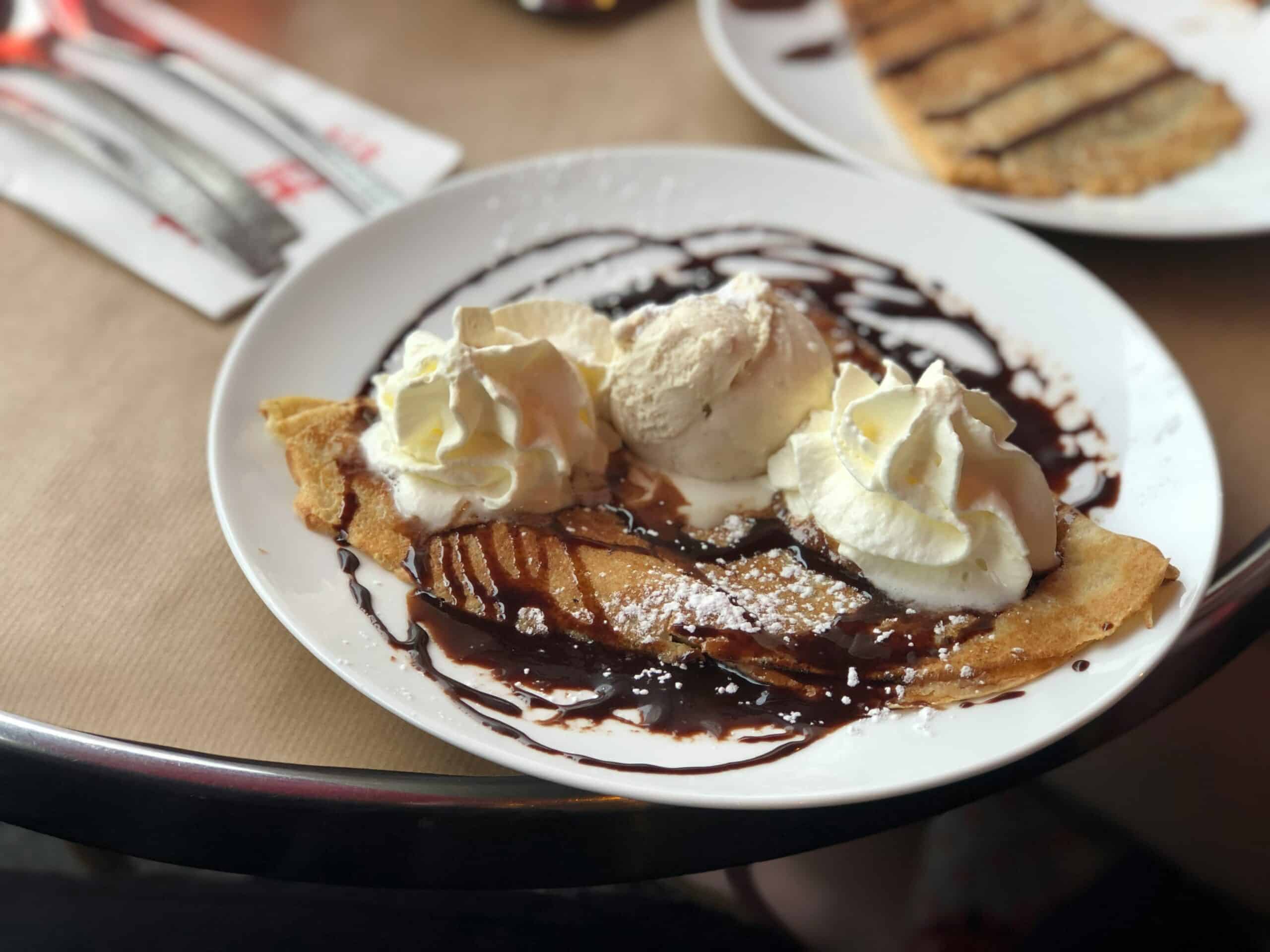
A crêperie is a casual restaurant specializing in crêpes and galettes.
Crêperies are especially associated with Brittany, where savory buckwheat galettes are a regional staple. A typical savory galette might include ham, cheese, egg, mushrooms, smoked salmon, or vegetables. Sweet crêpes may come with butter and sugar, jam, chocolate, salted caramel, apples, or whipped cream.
Crêperies are usually relaxed, affordable, and family-friendly. They are a good choice for lunch, a casual dinner, or a lighter meal when you want something satisfying but not too heavy.
If you see cider on the menu, order it. Breton cider is a classic pairing with galettes and crêpes.
What to order at a crêperie: galette complète with ham, cheese, and egg; smoked salmon galette; salted caramel crêpe; butter and sugar crêpe; or Breton cider.
Choose a crêperie when you want something casual, regional, and easy to enjoy.
What Is a Salon de Thé?
A salon de thé is a tearoom, often quieter and more refined than a café.
This is where you might go for tea, pastries, light lunches, quiche, salads, or an elegant afternoon break. Some salons de thé are attached to pâtisseries, making them ideal for enjoying a beautifully made dessert without taking it to go.
The atmosphere is usually calmer than a busy café or brasserie. It may feel more traditional, feminine, or old-world, depending on the location.
What to order at a salon de thé: tea, hot chocolate, quiche, salad, fruit tart, macaron, cake, or a pastry from the display case.
Choose a salon de thé when you want tea, pastries, a quiet break, or a light lunch in a more polished setting.
What Is a Marché?
A marché is a market, and it can be one of the best places to experience French food culture without sitting down in a restaurant.
French markets may be outdoor street markets, covered markets, or neighborhood food halls. You will often find produce, cheese, charcuterie, olives, rotisserie chicken, flowers, seafood, bread, regional specialties, and prepared foods.
Markets are ideal for travelers who want to create a picnic lunch or taste local products in a more casual way. They are also a wonderful place to observe daily life, especially in smaller towns where the market is still a major social event.
Go early for the best selection, bring cash when possible, and greet vendors politely before ordering.
What to buy at a marché: cheese, baguette, fruit, olives, saucisson, roasted chicken, local pastries, prepared salads, or regional specialties.
Choose a marché when you want picnic ingredients, local specialties, or a more everyday glimpse of French food culture.
France Dining Customs Travelers Should Know Before They Go
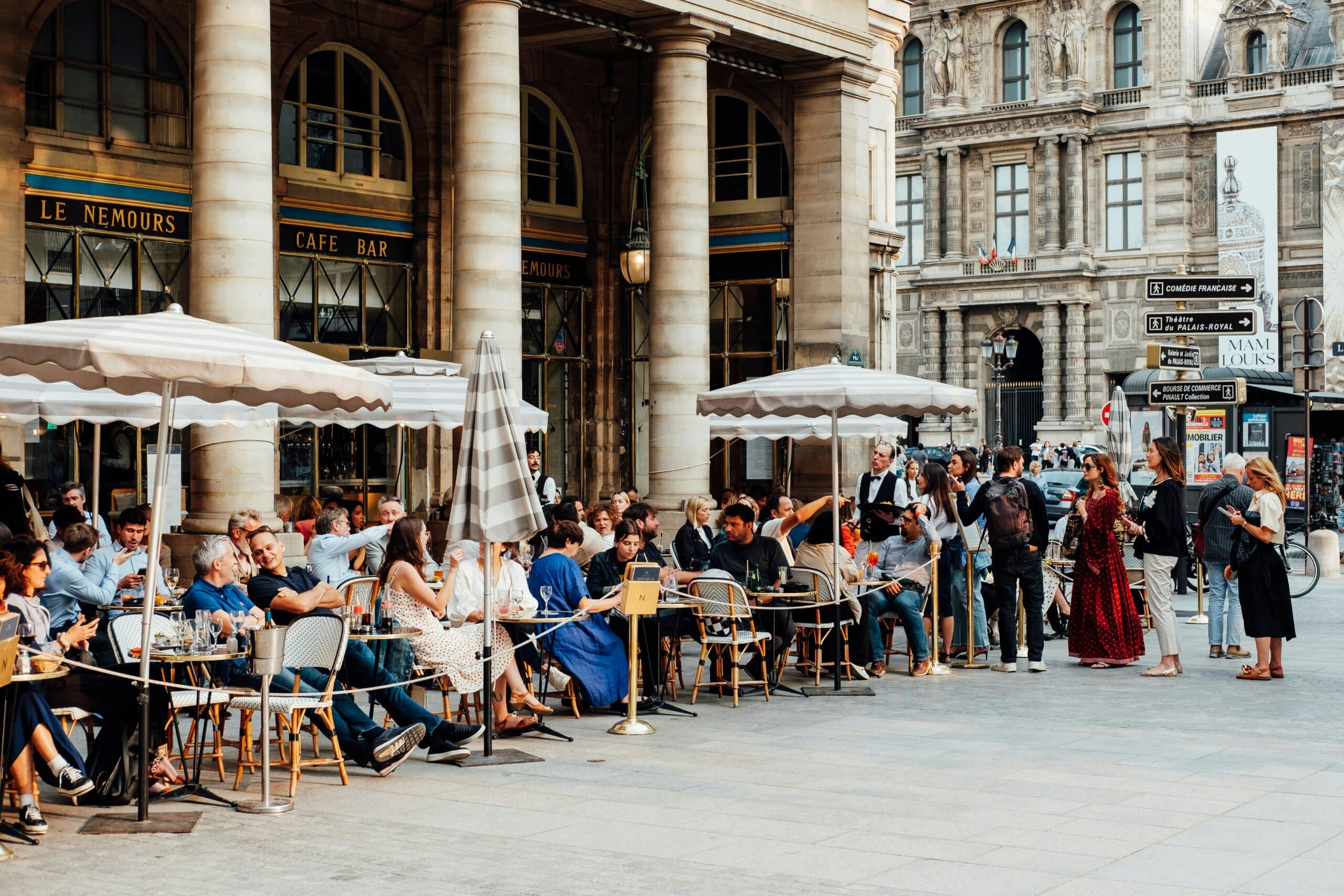
Understanding the types of French dining establishments is only part of the experience. The other part is knowing how meals work once you sit down.
France dining customs can feel confusing at first, especially for American travelers used to faster service, flexible meal times, free refills, and constant check-ins. In France, the rhythm is different. Once you understand it, the experience feels much less stressful.
For more cultural surprises travelers should know before they go, read 11 Things That Shock Americans in Europe.
Meal Times Are More Structured
French restaurants tend to follow specific meal times.
Lunch is usually served from about 12:00 PM to 2:00 PM. Dinner usually begins around 7:30 PM and continues into the evening.
If you arrive at 2:30 PM looking for lunch, many kitchens will be closed. If you arrive at 6:00 PM expecting dinner, you may be too early. This is one of the biggest surprises for travelers.
Brasseries and cafés are the main exceptions. Brasseries often serve full meals throughout the day, while cafés may offer light food outside traditional service hours. Boulangeries can also be a lifesaver for sandwiches and pastries between meals.
This matters when you are planning museum days, train transfers, guided tours, or long sightseeing routes. If your schedule is unpredictable, know where the nearest brasserie, café, or boulangerie is before hunger becomes a problem.
Service Is Slower by Design
In France, slow service is not always bad service. Often, it is the point.
Servers generally do not interrupt constantly, refill your glass every few minutes, or bring the check before you ask. To American travelers, this can feel inattentive. In France, it is usually a sign that you are being given space to enjoy your meal.
If you need something, make eye contact, raise your hand slightly, or say “s’il vous plaît” when the server passes. Do not snap your fingers, wave aggressively, or call across the room.
When you are ready to leave, ask for the check by saying:
L’addition, s’il vous plaît.
The check will not usually appear until you request it.
French meals reflect the slower rhythm of European travel. For more inspiration on embracing the journey instead of rushing through it, read Slow Travel Europe.
Water Is Not Automatic
In France, water may not arrive automatically at the table.
If you want free tap water, ask for:
Une carafe d’eau, s’il vous plaît.
If you simply ask for water, the server may offer bottled still or sparkling water, which will appear on your bill. Bottled water is not a scam. It is just a product, like wine or soda. But if you want the free option, be specific.
Bread Is Served Differently
Bread is usually included with sit-down meals, but it does not always come with butter. In many French restaurants, bread is eaten plain or used to enjoy sauces on the plate.
You may also notice there are no bread plates. The bread may sit directly on the table or on the edge of your main plate. That is normal. Crumbs on the table are expected.
Bread is not treated as a separate appetizer course. It is part of the meal.
Coffee Comes After Dessert
In France, coffee is usually served after dessert, not with dessert.
The typical order is:
- Starter
- Main course
- Dessert
- Coffee
If you order “un café,” you will usually receive espresso. If you want something closer to American coffee, ask for “un café allongé.” It will still be stronger and smaller than typical American drip coffee, but it is the closest option in many places.
Tipping Is Different in France
Tipping in France is not the same as tipping in the United States.
Service is included in restaurant prices, so servers are not dependent on tips in the same way American servers are. You may see “service compris” on the bill, which means service is included.
That said, it is common to leave a small extra amount for good service. You might round up at a café, leave a few euros at a casual meal, or leave a little more at a nicer restaurant if the service was excellent.
You do not need to tip 20%. In fact, doing so may mark you as someone who does not understand the local custom.
Tipping works differently across Europe, and France is no exception. For a deeper breakdown of when, where, and how much to tip, read Everything You Need To Know About Tipping in Europe.
Dress Thoughtfully
French restaurants may not always post dress codes, but appearance still matters.
For bistros, cafés, and casual brasseries, smart casual is usually fine. Clean jeans, a nice shirt, simple dresses, sweaters, or polished casual clothes work well.
For formal restaurants, dress more intentionally. Avoid gym clothes, beachwear, flip-flops, baseball caps, or anything that looks like you just came straight from a long, sweaty sightseeing day.
The goal is not to look fancy everywhere. The goal is to look respectful of the setting.
Do Not Expect Endless Modifications
French menus are not usually treated as flexible templates.
In the United States, it is common to ask for substitutions, sauces on the side, removed ingredients, or customized sides. In France, dishes are often viewed as composed by the chef. Asking for major changes may be met with confusion or resistance.
If you have a real allergy or dietary restriction, say so clearly. Most restaurants will do their best to help. But if you simply dislike an ingredient, it is usually better to order something else rather than ask the kitchen to redesign the dish.
Splitting Checks Can Be Awkward
Splitting a bill several ways is not always easy in France.
Some restaurants may accommodate it, but others may prefer one payment. If you are dining with a group, it is better to decide in advance how you will handle the bill. One person can pay and be reimbursed, or the group can calculate shares and pool cash.
If separate checks are important, ask at the beginning of the meal rather than after everyone has finished eating.
Understanding French Menus
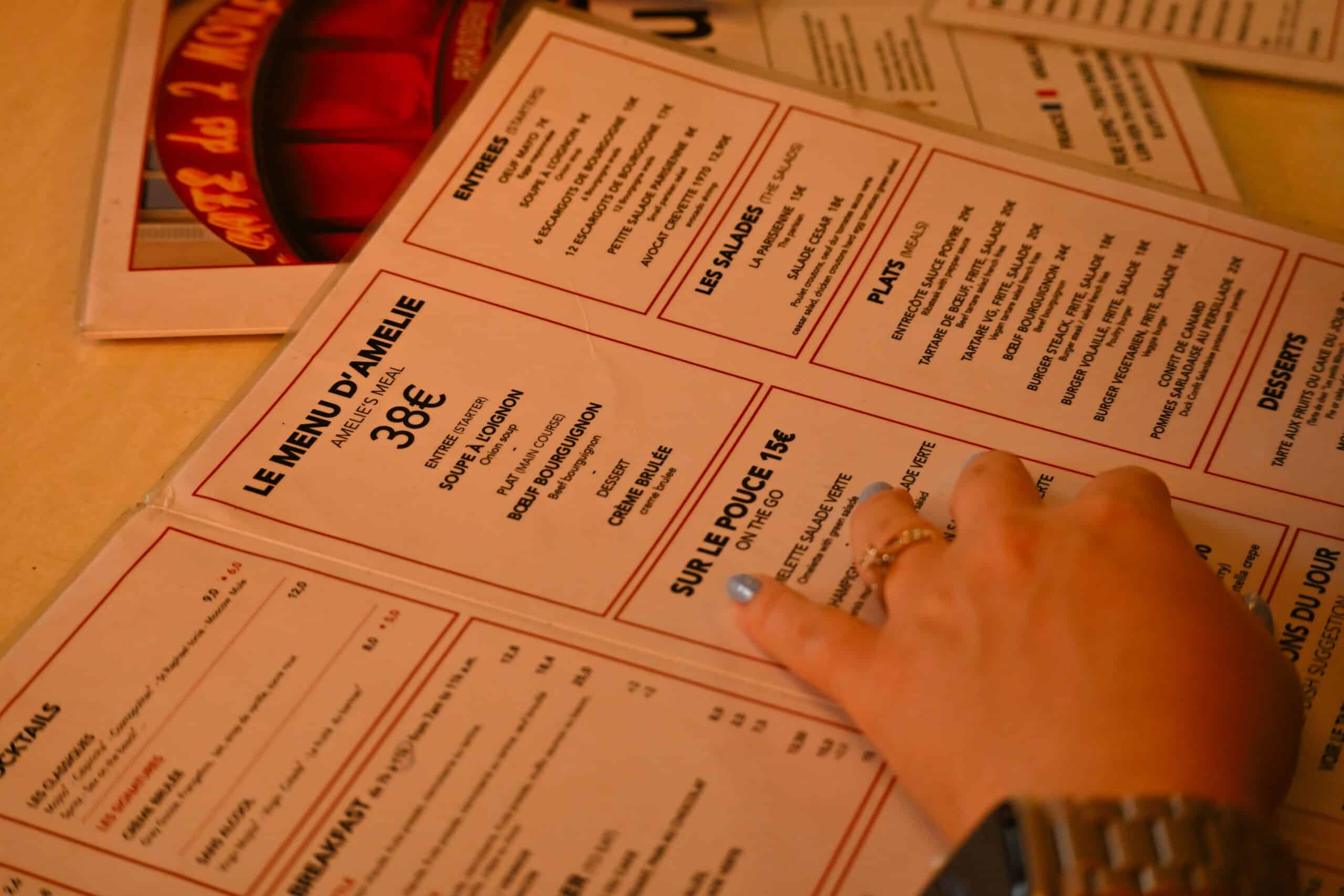
French menus can be confusing because some familiar words mean different things.
Menu: In France, “menu” often means a fixed-price meal with a few course options, similar to what Americans might call a prix fixe meal.
La carte: The full list of dishes available to order individually.
Entrée: The starter or appetizer, not the main course.
Plat: The main course.
Garniture: The side dish or accompaniment.
Dessert: Dessert.
Boissons: Drinks.
A fixed-price menu can often be one of the best values in France, especially at lunch. It usually reflects what the kitchen is preparing that day and can be a great way to enjoy multiple courses without overspending.
How to Choose the Right Place to Eat in France
Choosing where to eat in France becomes much easier once you understand what each place is designed to do.
If you want a casual, traditional meal, choose a bistro.
If you are hungry outside normal lunch or dinner hours, choose a brasserie.
If you want a more refined or special-occasion meal, book a restaurant.
If you want coffee, a drink, or a place to linger, choose a café.
If you want breakfast, pastries, bread, or a picnic sandwich, go to a boulangerie.
If you want elegant desserts, visit a pâtisserie.
If you are in Lyon and want a traditional regional meal, reserve a bouchon.
If you want savory galettes or sweet crêpes, find a crêperie.
If you want a quiet afternoon tea or pastry break, look for a salon de thé.
If you want picnic ingredients or local specialties, visit a marché.
The best choice depends less on which place is “best” and more on what kind of experience you want.
Regional Dining Differences in France
French food culture changes dramatically by region, and that is part of what makes dining in France so rewarding. France-Voyage highlights regional specialties, traditional eating habits, fresh produce, and culinary culture as major reasons travelers come to enjoy French cuisine.
In Lyon, bouchons celebrate hearty Lyonnaise cuisine. In Brittany, crêperies serve buckwheat galettes and cider. In Alsace, menus often reflect German influence with choucroute, sausages, beer, and winstubs. In Provence, meals lean toward Mediterranean flavors, olive oil, herbs, seafood, and outdoor dining. Normandy is known for cream, apples, cider, seafood, and Calvados.
This means travelers should avoid expecting the same food everywhere. One of the joys of eating in France is discovering what belongs to the place you are visiting.
A good rule: order regionally when possible. If you are in Lyon, try Lyonnaise food. If you are in Brittany, order galettes. If you are in Provence, look for seasonal vegetables, seafood, olive oil, and rosé. Eating this way makes meals feel more connected to the destination.
Why French Dining Feels Different
French dining can feel slow, formal, or even confusing to travelers at first. But much of that difference comes from a different cultural idea of what a meal is supposed to be.
In France, meals are not just fuel stops. They are social rituals, daily pauses, and expressions of craft. Service is not designed to rush you out. Coffee is not meant to be carried in a giant cup down the street. Dinner is not something squeezed into a 30-minute gap between activities.
The pace is part of the pleasure.
Once you understand that, many of the customs start to make sense. The server is not ignoring you. They are giving you time. The check does not arrive automatically because no one wants to push you out. The kitchen closes between meals because lunch and dinner have defined rhythms. The bread comes without butter because it plays a different role at the table.
The travelers who eat best in France are not necessarily the ones who know the most vocabulary. They are the ones who slow down, observe, adapt, and let the meal unfold the French way.
Explore France With More Confidence
Dining in France is easier when you know what kind of place to choose, when to arrive, and how the meal is expected to unfold. The right knowledge can turn a confusing restaurant experience into one of the best memories of your trip.
Guidester helps travelers avoid those small but stressful cultural surprises by building thoughtful, customized European itineraries with practical local insight woven in. From choosing the right neighborhoods and restaurants to understanding local customs, pacing your days, and knowing what to expect before you arrive, we help you experience France with less guesswork and more enjoyment.
Whether you are planning your first trip to Paris, exploring Lyon’s bouchons, browsing markets in Provence, or lingering at a café terrace with nowhere urgent to be, understanding how French dining works helps you feel less like an outsider and more like a traveler who knows how to savor the moment.
FAQ: France Dining Guide
What is the best France dining guide for first-time travelers?
The best France dining guide for first-time travelers explains not only where to eat, but how different dining establishments work. Bistros, brasseries, restaurants, cafés, boulangeries, pâtisseries, and bouchons all serve different purposes. Understanding those differences helps travelers choose the right place, avoid awkward mistakes, and enjoy French dining with more confidence.
What is the difference between a bistro and brasserie?
The main difference between bistro and brasserie comes down to size, atmosphere, menu, and hours. A bistro is usually a small, casual neighborhood restaurant serving traditional French home-style cooking with a shorter menu and a more intimate atmosphere. A brasserie is larger, livelier, and more flexible, often serving food throughout the day with a broader menu that may include seafood, steak frites, beer, and classic French dishes.
Is a brasserie more formal than a bistro?
Not necessarily. A brasserie may look grander or more polished, but it is often lively and casual in spirit. A bistro usually feels smaller and more intimate, while a brasserie feels bigger, busier, and more energetic.
Can you eat at a café in France?
Yes, but cafés are better for coffee, drinks, people-watching, and light food. You may find croissants, sandwiches, salads, omelets, or croque-monsieurs, but cafés are not usually the best choice for a full meal.
What is the difference between a boulangerie and a pâtisserie?
A boulangerie focuses on bread, baguettes, croissants, and everyday baked goods. A pâtisserie specializes in refined desserts such as cakes, tarts, éclairs, macarons, and pastries. Some shops are both, but the focus is different.
What is a bouchon in Lyon?
A bouchon is a traditional Lyonnaise tavern serving hearty regional dishes in a warm, old-fashioned setting. Bouchons are closely tied to Lyon’s culinary heritage and are one of the city’s defining dining experiences.
Do you tip in France?
Service is included in restaurant prices, so tipping is not required in the same way it is in the United States. However, it is common to leave a small extra amount for good service, such as rounding up at a café or leaving a few euros after a nice meal.
Can you eat at any time in France?
Not always. Many restaurants serve lunch from around 12:00 PM to 2:00 PM and dinner from around 7:30 PM onward. Brasseries, cafés, and boulangeries are better options outside traditional meal times.
What does “menu” mean in France?
In France, “menu” often means a fixed-price meal with a few course options. The full list of individually priced dishes is called “la carte.” This is different from American English, where “menu” usually means the complete list of dishes.
Is it rude to ask for substitutions in France?
It depends. Restaurants will usually take allergies and dietary restrictions seriously, but casual preferences or major modifications may not be welcomed. French dishes are often treated as composed by the chef, so it is better to order something that already fits your needs.
What should travelers avoid doing in French restaurants?
Avoid snapping your fingers at servers, expecting the check to arrive automatically, asking for excessive modifications, arriving outside meal times, or assuming water and refills work the same way they do in the United States. A little cultural awareness goes a long way.